
The construction industry thrives on precision, and a crucial milestone in any project is achieving practical completion. This signifies the point at which the works are substantially complete and can be used for their intended purpose. The Practical Completion Certificate Template Jct, often utilized in projects governed by the Joint Contracts Tribunal (JCT) suite of contracts, serves as formal confirmation of this pivotal moment. Understanding the nuances of this certificate, its purpose, and how to use it effectively is paramount for both contractors and employers to ensure a smooth and legally sound project completion.
A properly executed Practical Completion Certificate Template Jct provides a clear record of the date on which practical completion was achieved. This date is not merely a formality; it triggers a series of important consequences under the JCT contract, including the commencement of the defects liability period, the release of a portion of the retention money to the contractor, and the transfer of insurance responsibility for the works to the employer. Therefore, accuracy and adherence to the contract terms are essential when issuing and receiving this document.

This article will delve into the intricacies of the Practical Completion Certificate Template Jct, exploring its purpose, key components, legal implications, and practical considerations for both contractors and employers. We'll explore what constitutes practical completion, common disputes that arise, and best practices for completing the certificate to minimize potential conflicts. Furthermore, we will examine available templates and resources to help navigate this important stage of a construction project.

Ultimately, a thorough understanding of the Practical Completion Certificate Template Jct process empowers all parties involved to manage project risks effectively, maintain positive working relationships, and ensure a successful project outcome. Navigating this process correctly minimizes disputes and provides clarity around obligations for both the contractor and the employer.

Understanding Practical Completion
What Constitutes Practical Completion?
Practical completion, in essence, means that the works are substantially complete and fit for the intended purpose, even if minor defects or outstanding items remain. This definition is somewhat subjective and often leads to disputes. The JCT contracts typically do not provide an exhaustive list of criteria for determining practical completion, leaving some room for interpretation.

Several factors are considered when assessing practical completion, including:

- Substantial Completion: The works must be substantially finished, meaning the core elements are in place and functioning.
- Fitness for Purpose: The works must be usable for their intended purpose, even if some minor tasks are still outstanding.
- Outstanding Minor Works (Snagging): The existence of minor defects or snagging items does not necessarily prevent practical completion. However, the nature and extent of these items are crucial considerations.
- Compliance with Regulations: The works must comply with all relevant building regulations and statutory requirements.
Common Disputes Related to Practical Completion
Disputes regarding practical completion are common in the construction industry. These disputes often arise due to differing interpretations of the term "substantially complete" and disagreements about the nature and severity of outstanding defects. Some common scenarios include:

- Disagreement on the Severity of Defects: The employer may argue that the defects are so significant that the works are not fit for purpose, while the contractor may view them as minor snagging items.
- Uncompleted Works: Disputes can arise if there are substantial portions of the works that remain incomplete, preventing the employer from using the building as intended.
- Delays in Rectification: Delays in rectifying defects after practical completion can also lead to disputes, particularly if the defects affect the functionality or usability of the building.
- Access Issues: Employers and Contractors often disagree on access to the site during the defects liability period, where contractors need access to rectify the defects.
To mitigate these disputes, it is crucial to have clear and detailed contract documentation, including a comprehensive scope of works, specifications, and quality standards. Regular site inspections and progress meetings can also help identify and address potential issues early on.

Key Components of a Practical Completion Certificate Template Jct
A standard Practical Completion Certificate Template Jct should contain several key components to ensure clarity and enforceability. These components provide a comprehensive record of the project's status at the time of practical completion.
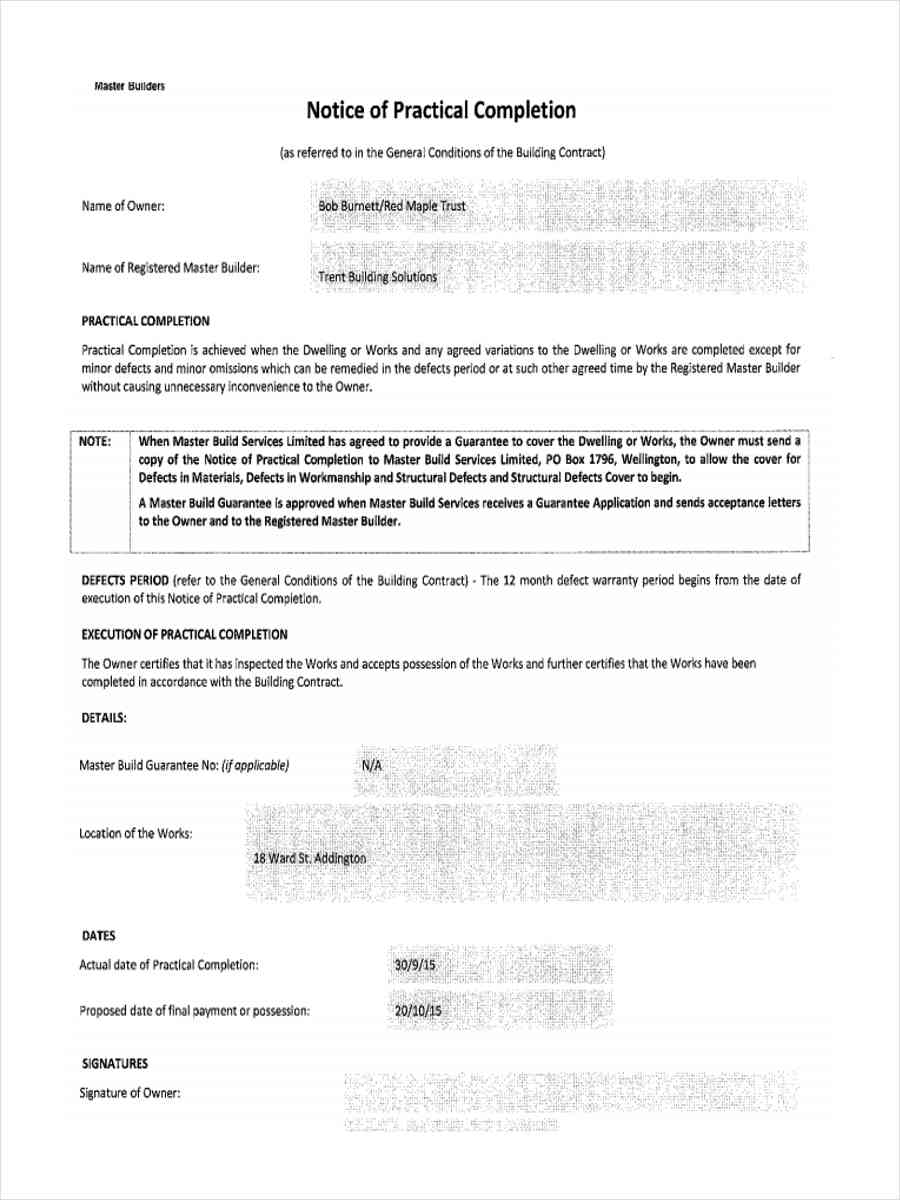
- Project Information: This section includes details such as the project name, address, and contract reference number.
- Parties Involved: The certificate should clearly identify the employer, contractor, architect/contract administrator, and any other relevant parties.
- Date of Practical Completion: This is a critical element of the certificate, as it triggers various contractual obligations.
- Description of the Works: A brief description of the completed works should be included to provide context.
- Confirmation of Practical Completion: A statement explicitly confirming that practical completion has been achieved.
- Snagging List (Optional): While not always included directly on the certificate, a snagging list outlining outstanding minor defects is often attached as an appendix.
- Signatures: The certificate must be signed and dated by the architect/contract administrator (or other authorized representative) on behalf of the employer. It is also good practice for the contractor to sign the certificate, acknowledging receipt, but the signature of the contractor is not usually mandatory.
- Retention Release Details: The certificate may also include details regarding the release of retention money to the contractor.
Using the Practical Completion Certificate Template Jct Effectively
Effectively using a Practical Completion Certificate Template Jct involves careful attention to detail and adherence to the JCT contract terms. Here's a step-by-step guide:

- Review the Contract: Before issuing or receiving a certificate, thoroughly review the JCT contract to understand the specific requirements and procedures for practical completion.
- Conduct a Thorough Inspection: Conduct a comprehensive site inspection to assess the progress of the works and identify any outstanding defects or incomplete items.
- Prepare a Snagging List: Create a detailed snagging list, documenting all minor defects or outstanding items. Include clear descriptions, locations, and any relevant photographs.
- Complete the Certificate Accurately: Fill out the certificate accurately and completely, ensuring all required information is included. Pay particular attention to the date of practical completion.
- Attach the Snagging List (If Applicable): If a snagging list has been prepared, attach it to the certificate as an appendix.
- Obtain Signatures: Ensure the certificate is signed and dated by the architect/contract administrator (or other authorized representative). Request the contractor's signature as acknowledgement.
- Distribute Copies: Distribute copies of the completed certificate and snagging list to all relevant parties, including the employer, contractor, and any other stakeholders.
- Monitor Rectification of Defects: Monitor the progress of the contractor in rectifying the defects identified on the snagging list within the defects liability period.
Legal Implications of the Practical Completion Certificate
The Practical Completion Certificate Template Jct carries significant legal implications. Once issued, it triggers a series of contractual obligations and affects the rights and responsibilities of both the employer and the contractor.
- Commencement of Defects Liability Period: The date of practical completion marks the start of the defects liability period, during which the contractor is responsible for rectifying any defects that arise.
- Release of Retention Money: A portion of the retention money held by the employer is typically released to the contractor upon practical completion. The specific amount and timing of the release are usually specified in the JCT contract.
- Transfer of Insurance Responsibility: Insurance responsibility for the works often transfers from the contractor to the employer upon practical completion.
- Liquidated Damages: If the project was subject to liquidated damages for delays, the issuance of the practical completion certificate stops the accrual of further liquidated damages.
- Final Payment: Practical completion is a key milestone in the process leading to the final payment to the contractor.
It's crucial to understand these legal implications and to ensure that the certificate is issued and received in accordance with the JCT contract terms. Any errors or omissions on the certificate could have significant consequences for all parties involved.
Best Practices for Completing the Practical Completion Certificate Template Jct
To avoid disputes and ensure a smooth completion process, follow these best practices when completing a Practical Completion Certificate Template Jct:
- Be Clear and Concise: Use clear and concise language when completing the certificate. Avoid ambiguity or vague terms that could lead to misinterpretations.
- Be Accurate: Ensure all information on the certificate is accurate and consistent with the project records.
- Document Everything: Keep detailed records of all inspections, meetings, and communications related to practical completion.
- Communicate Effectively: Maintain open and transparent communication with all parties involved throughout the completion process.
- Seek Legal Advice: If you are unsure about any aspect of the practical completion process, seek legal advice from a construction law specialist.
Practical Completion Certificate Template Jct: Available Resources
Numerous resources are available to assist with completing a Practical Completion Certificate Template Jct. These resources include:
- JCT Website: The official JCT website provides access to the JCT suite of contracts and associated guidance documents.
- Online Templates: Various websites offer downloadable templates for practical completion certificates. However, it's essential to ensure that the template is suitable for the specific JCT contract being used.
- Construction Law Firms: Construction law firms often provide templates and guidance on practical completion.
- RICS (Royal Institution of Chartered Surveyors): RICS provides information and guidance related to construction contracts and procedures.
Remember to carefully review any template to ensure it aligns with the specific requirements of the applicable JCT contract and reflects the unique circumstances of the project.
Conclusion
The Practical Completion Certificate Template Jct is a vital document in construction projects governed by JCT contracts. It signifies a crucial milestone, triggers significant contractual obligations, and affects the rights and responsibilities of both the employer and the contractor. A thorough understanding of practical completion, the key components of the certificate, its legal implications, and best practices for completing it are essential for avoiding disputes and ensuring a smooth project completion process. By paying attention to detail, communicating effectively, and seeking legal advice when necessary, all parties can navigate this important stage of a construction project successfully.
0 Response to "Practical Completion Certificate Template Jct"
Posting Komentar