Organizing vast amounts of data into meaningful, actionable insights is a perennial challenge for businesses of all sizes. While the aspiration to be data-driven is widespread, the practical roadmap to achieve this often remains elusive, leading to fragmented efforts, wasted resources, and missed opportunities. This is precisely where a robust Business Intelligence Plan Template becomes indispensable, acting as the strategic blueprint that transforms raw data into a powerful engine for growth and competitive advantage. It's more than just a document; it's a living guide that ensures every data initiative aligns with overarching business objectives.
A well-crafted BI plan provides clarity, defines scope, allocates resources, and establishes measurable goals, preventing common pitfalls like data silos and irrelevant reporting. Without such a framework, organizations risk investing heavily in technology and personnel without seeing a commensurate return on investment, simply because their efforts lack strategic direction. The template serves as a structured approach, forcing stakeholders to think critically about their data needs, current capabilities, and desired future state.
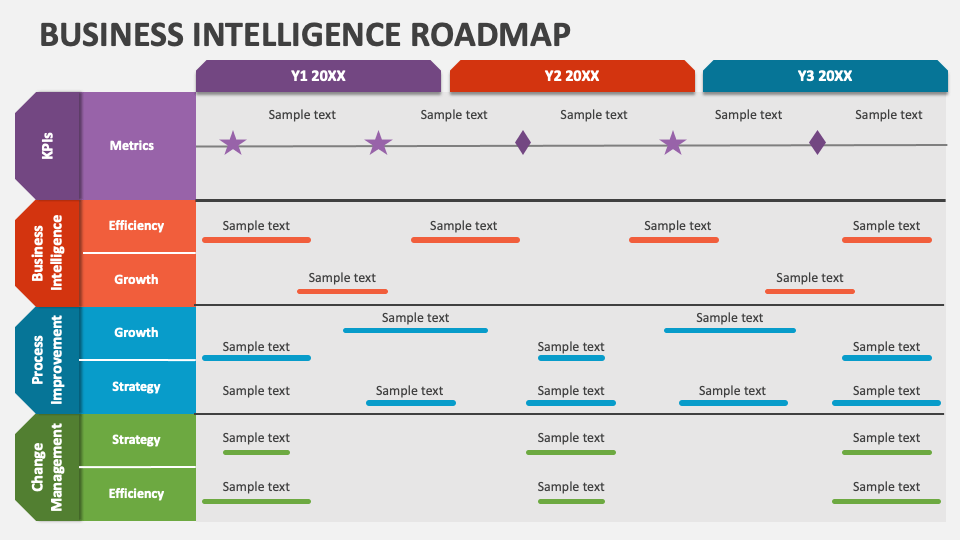
By systematically outlining every aspect of a BI initiative—from data sources and technology stack to user training and governance—this template empowers teams to execute with precision. It fosters collaboration across departments, ensuring that everyone from IT specialists to executive decision-makers understands their role in the data ecosystem. This unified vision is crucial for cultivating a truly data-driven culture, where insights are not just generated but actively utilized to inform critical business decisions.

This article will delve into the critical components of an effective Business Intelligence Plan Template, guiding you through its creation and implementation. We'll explore why such a template is essential for modern enterprises, dissect its key sections, provide a step-by-step approach to filling it out, and discuss best practices for ensuring its success. Prepare to unlock the full potential of your business data with a structured, strategic approach.
Understanding the Power of a Business Intelligence Plan Template
Business Intelligence (BI) refers to the strategies and technologies used by enterprises for the data analysis of business information. BI technologies provide historical, current, and predictive views of business operations. Common functions of business intelligence technologies are reporting, online analytical processing (OLAP), analytics, data mining, process mining, complex event processing, business performance management, benchmarking, text mining, predictive analytics, and prescriptive analytics. A Business Intelligence Plan Template elevates these technological capabilities into a strategic asset. It's not merely about collecting data; it's about defining what data to collect, how to process it, who needs it, and what actions should result from it.
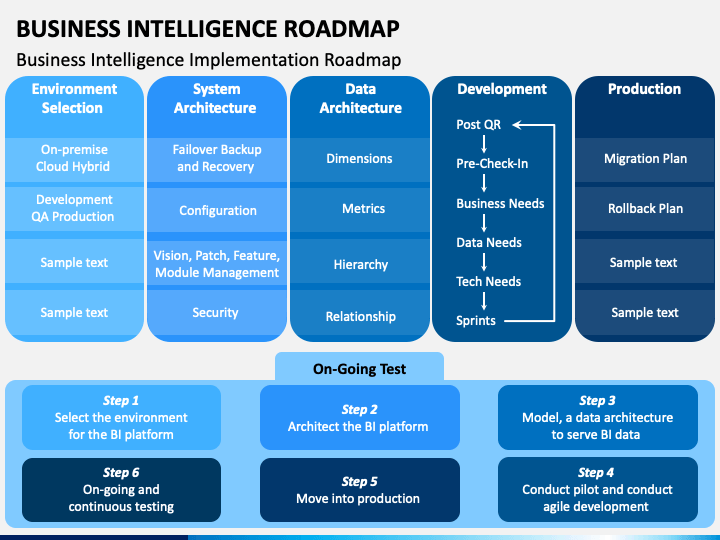
The primary benefit of a structured BI plan is alignment. It ensures that all BI efforts are directly tied to the organization's overarching strategic goals, preventing the creation of reports or dashboards that offer interesting but ultimately unactionable insights. By documenting the entire lifecycle of a BI initiative, from conception to ongoing maintenance, the template helps manage expectations, clarify roles, and facilitate communication among diverse stakeholders. It acts as a single source of truth for the project, minimizing misunderstandings and streamlining execution.
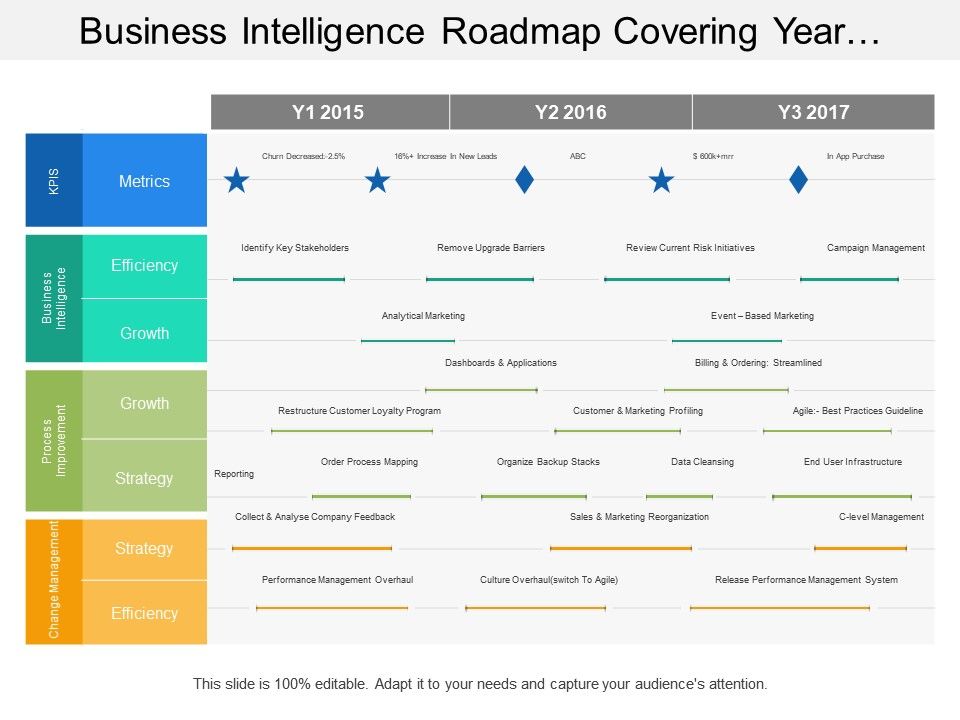
Furthermore, a comprehensive template provides a clear framework for resource allocation and budgeting. It forces teams to identify necessary software, hardware, personnel, and training requirements upfront, allowing for more accurate cost estimations and preventing unexpected expenditures down the line. This proactive planning is crucial for securing executive buy-in and demonstrating a clear return on investment (ROI) for BI initiatives.

The Strategic Imperative: Why Every Business Needs This Template
In today's fast-paced, data-rich environment, businesses that fail to leverage their data effectively risk falling behind competitors. A Business Intelligence Plan Template isn't just a good idea; it's a strategic imperative. It provides the necessary structure to:
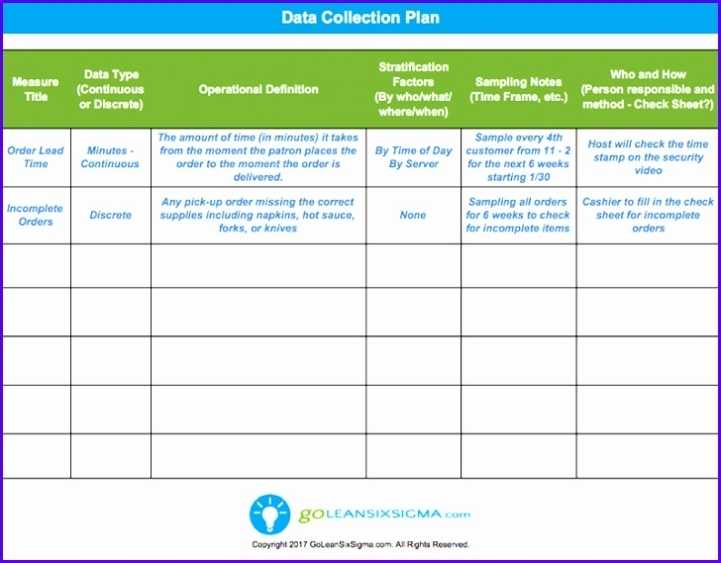
- Improve Decision-Making: By defining clear objectives and KPIs, the template ensures that BI efforts focus on delivering insights critical for strategic and operational decisions.
- Enhance Operational Efficiency: Identifying key processes and metrics allows businesses to pinpoint inefficiencies and optimize workflows.
- Gain Competitive Advantage: Understanding market trends and customer behavior through data analytics can unlock new opportunities and foster innovation.
- Reduce Costs: By identifying redundant processes or underperforming areas, BI can lead to significant cost savings.
- Ensure Data Quality and Governance: The template prompts organizations to establish standards for data collection, storage, and security, building trust in their data assets.
- Foster Data Literacy: By outlining user training and adoption strategies, it helps cultivate a culture where data is understood and utilized by a wider audience.
Essential Sections of Your Business Intelligence Plan Template
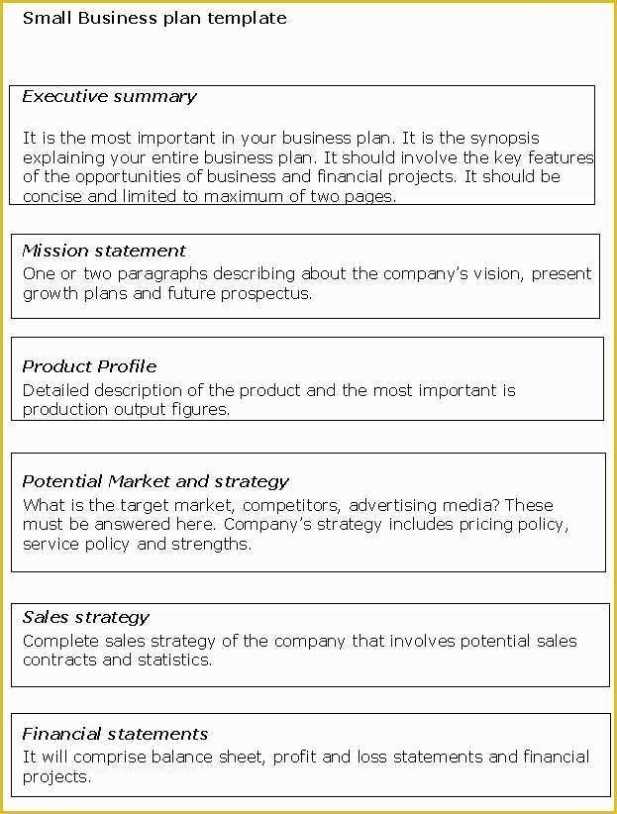
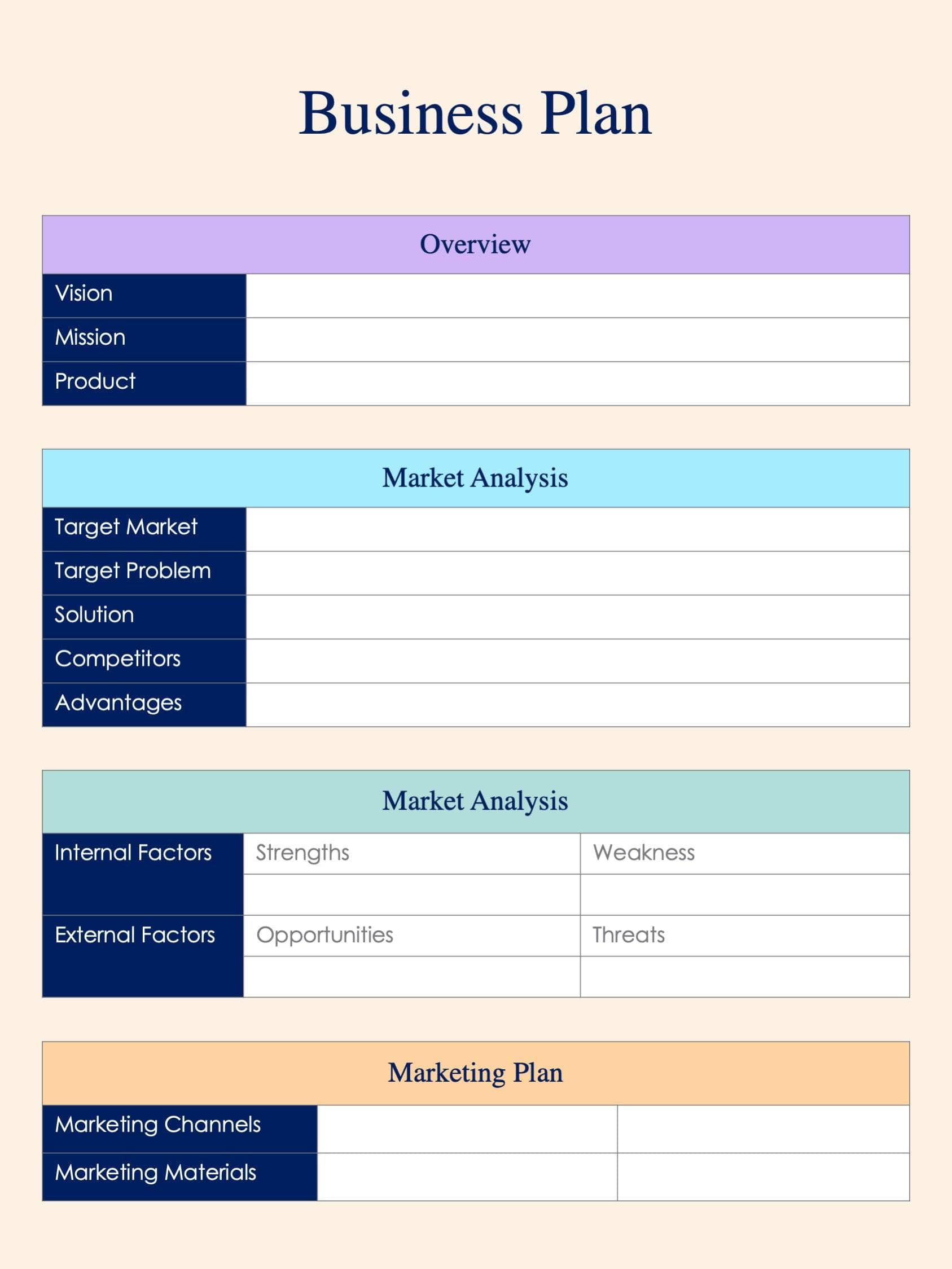
An effective Business Intelligence Plan Template should be comprehensive, covering all facets of a BI initiative from conceptualization to execution and maintenance. While specific needs may vary, the following sections represent the core components that should be included.
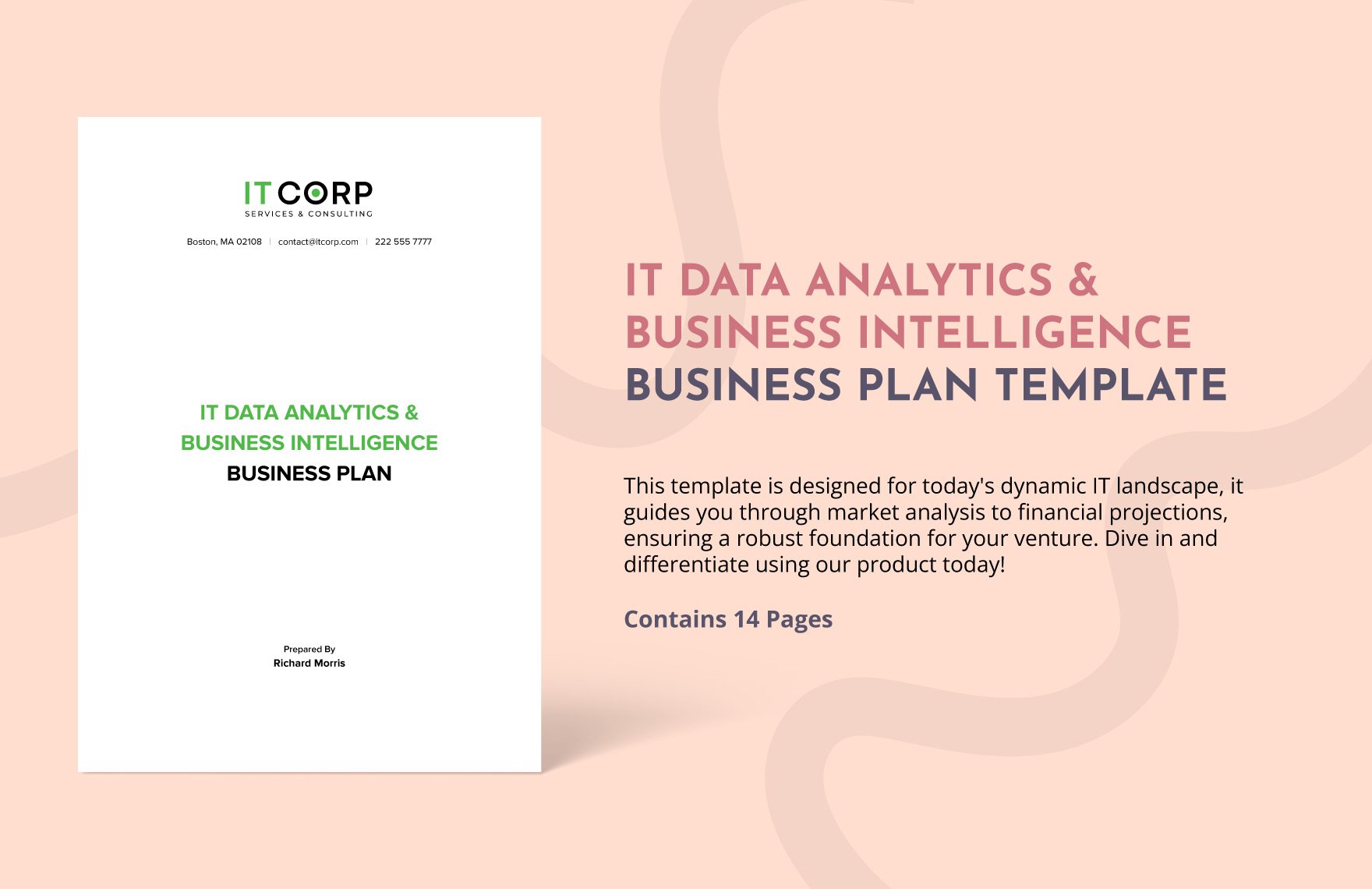
Executive Summary
This section provides a high-level overview of the entire plan. It should briefly state the purpose of the BI initiative, its main objectives, anticipated benefits, and the key resources required. It's designed for busy executives who need a quick understanding of the project's scope and strategic value.
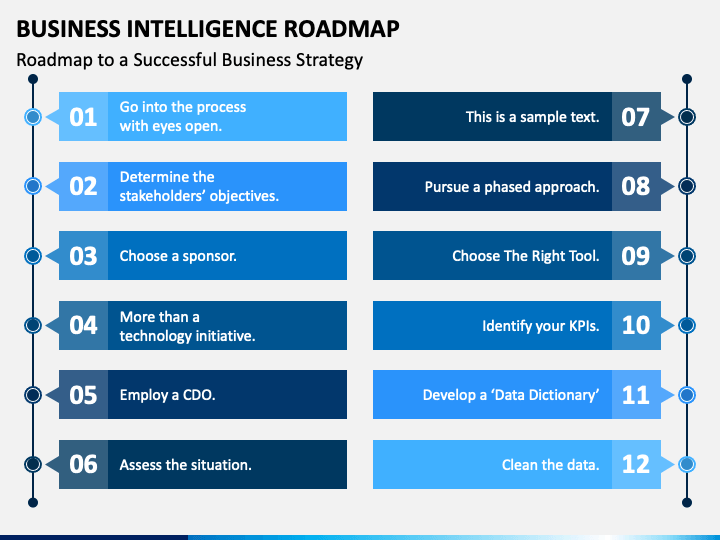
Vision and Objectives
Clearly articulate the vision for your BI initiative—what does a data-driven future look like for your organization? Follow this with specific, measurable, achievable, relevant, and time-bound (SMART) objectives. These objectives should directly align with broader business goals, such as "Reduce customer churn by 15% within 12 months by identifying at-risk customers through predictive analytics."

Stakeholder Analysis
Identify all key stakeholders involved in or affected by the BI initiative. This includes executive sponsors, department heads, data owners, IT teams, end-users, and potentially external partners. For each stakeholder group, define their roles, responsibilities, expectations, and how they will interact with the BI system and its outputs.
Data Sources and Management
This is a critical technical section. Document all internal and external data sources that will feed into your BI system (e.g., CRM, ERP, financial systems, marketing automation, social media, third-party APIs). Describe the methods for data extraction, transformation, and loading (ETL), data cleansing, data quality standards, and the proposed data architecture (e.g., data warehouse, data lake).
Technology Stack and Tools
Detail the specific hardware and software components that will constitute your BI environment. This includes BI platforms (e.g., Tableau, Power BI, Qlik Sense), data integration tools, databases, cloud infrastructure, and any specialized analytical applications. Justify the selection based on scalability, compatibility, cost, and user-friendliness.
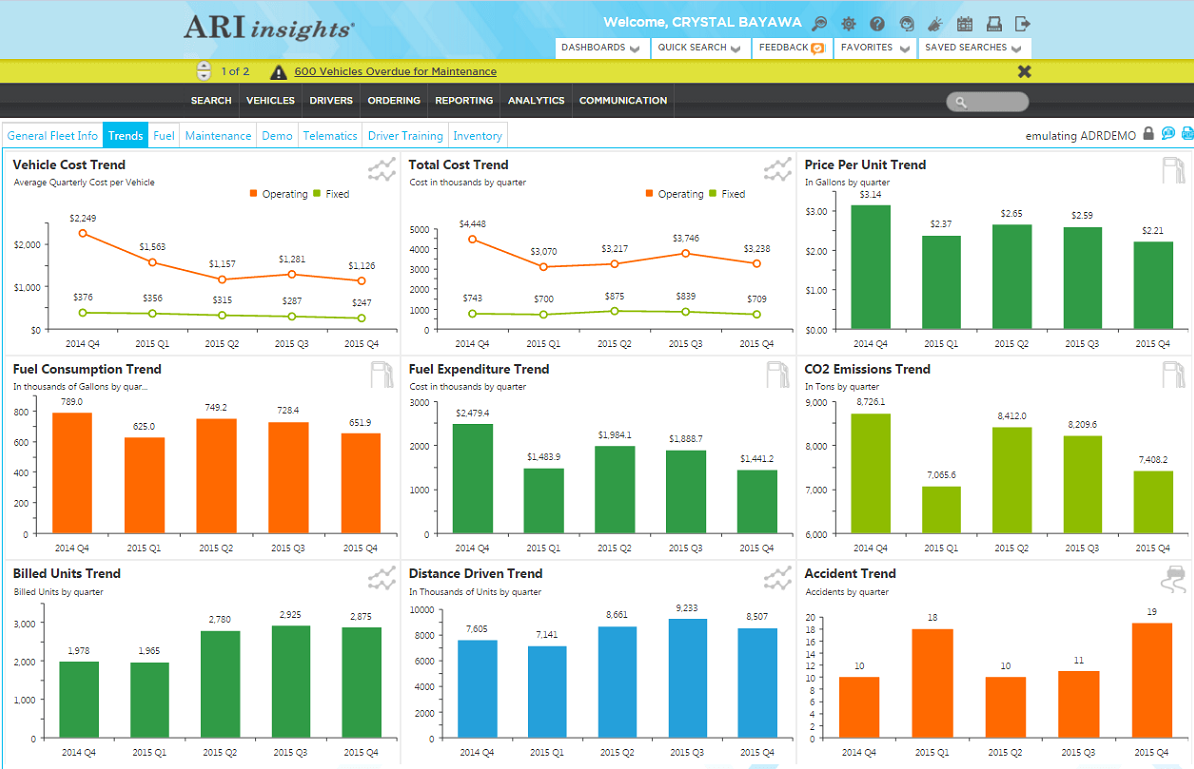
Reporting and Dashboard Requirements
Outline the specific reports and dashboards that will be created. For each, specify:
* Purpose: What business question does it answer?
* Audience: Who will use it?
* Key Metrics/KPIs: What data points will be displayed?
* Frequency: How often will it be updated (real-time, daily, weekly, monthly)?
* Format: Static report, interactive dashboard, mobile view?
* Data Visualization Needs: Specific chart types, filters, drill-down capabilities.
Resources and Budget
Provide a detailed breakdown of the resources required:
* Personnel: Data analysts, data engineers, BI developers, project managers, subject matter experts.
* Software Licenses: Costs for BI platforms, databases, ETL tools.
* Hardware/Infrastructure: Servers, cloud computing costs.
* Training: Costs for user training and skill development.
* Contingency: A percentage allocated for unforeseen issues.
Project Timeline and Milestones
Develop a realistic project plan with clear phases, timelines, and measurable milestones. This could include phases like discovery, data architecture design, tool implementation, report development, user acceptance testing (UAT), and go-live. Assign specific dates and responsible parties for each milestone.
Risk Management and Contingency Planning
Identify potential risks that could jeopardize the BI initiative (e.g., data quality issues, scope creep, budget overruns, lack of user adoption, data security breaches). For each risk, outline mitigation strategies and contingency plans to address them if they occur.
Training and Adoption Strategy
A BI system is only as good as its adoption. This section details how users will be trained (e.g., workshops, online modules, documentation), the communication plan for rollout, and ongoing support mechanisms. It should also address change management strategies to overcome resistance.
Step-by-Step: Utilizing Your Business Intelligence Plan Template
Filling out your Business Intelligence Plan Template is an iterative process that requires collaboration and careful consideration. Here's a structured approach:
Phase 1: Assessment and Discovery
Begin by conducting a thorough assessment of your current state. What data do you currently have? What are your existing reporting capabilities? What are the pain points of current data usage? Interview key stakeholders across departments to gather their specific needs, challenges, and desired outcomes. Understand their decision-making processes and the information gaps they face.
Phase 2: Defining Scope and Objectives
Based on your discovery, clearly define the scope of your BI initiative. What specific business problems will it address? What departments or processes will it impact? Translate these into the SMART objectives for your plan. This is where you fill out the "Vision and Objectives" and initial "Reporting and Dashboard Requirements" sections.
Phase 3: Data Strategy and Architecture
This phase focuses on the "Data Sources and Management" section. Identify all relevant data sources and plan how data will be extracted, transformed, and loaded into your BI environment. Design your data models, considering scalability, performance, and data governance. Think about data quality rules and master data management.
Phase 4: Tool Selection and Implementation
Populate the "Technology Stack and Tools" section. Based on your data strategy, reporting requirements, and budget, select the appropriate BI platform, data integration tools, and underlying infrastructure. This may involve vendor evaluations and proof-of-concept projects.
Phase 5: Development and Deployment
With your tools in place, begin developing the reports, dashboards, and analytical models outlined in your "Reporting and Dashboard Requirements." Conduct rigorous testing, including unit testing, integration testing, and user acceptance testing (UAT) with key stakeholders. Once approved, plan your deployment strategy.
Phase 6: Training and User Adoption
Execute the "Training and Adoption Strategy" outlined in your template. Provide comprehensive training to end-users, create user guides, and establish a support system. Communicate the benefits of the new BI system clearly and consistently to encourage widespread adoption.
Phase 7: Monitoring and Iteration
BI is not a one-time project. Regularly monitor the performance of your BI system against your defined objectives. Gather user feedback, analyze usage patterns, and identify areas for improvement. Use this feedback to iterate and enhance your reports, dashboards, and data models, keeping your Business Intelligence Plan Template a living document.
From Plan to Action: Implementation and Continuous Improvement
The true value of a Business Intelligence Plan Template lies not just in its creation but in its effective implementation and ongoing evolution. Adopting an agile methodology for BI projects can be highly beneficial, allowing for iterative development and continuous feedback loops. Rather than a lengthy, rigid project, breaking down the BI initiative into smaller, manageable sprints enables teams to deliver value incrementally, adapt to changing business needs, and demonstrate early successes.
Regular communication and strong change management are paramount during implementation. Users and stakeholders need to understand not only how to use the new BI tools but why they are being introduced and how they will benefit individuals and the organization. Championing data literacy through workshops and dedicated support channels can significantly boost adoption rates.
Once deployed, the BI system requires continuous monitoring and refinement. Key performance indicators (KPIs) related to the BI project itself (e.g., dashboard usage, report generation time, user satisfaction) should be tracked. The "Reporting and Dashboard Requirements" and "Objectives" sections of your template should be revisited periodically to ensure they remain relevant. As business strategies evolve, so too must the BI plan. This commitment to continuous improvement ensures that your BI capabilities remain a dynamic and powerful asset, always aligned with the organization's current and future needs.
Overcoming Hurdles: Challenges and Best Practices in BI Planning
Even with a robust Business Intelligence Plan Template, organizations can encounter challenges. Anticipating these and incorporating best practices can significantly increase the likelihood of success.
Common Challenges
- Data Silos and Inconsistent Data Quality: Data residing in disparate systems without standardization or clear ownership leads to unreliable insights.
- Lack of Executive Buy-in: Without strong leadership support, BI initiatives can struggle for resources and prioritization.
- Resistance to Change: Employees accustomed to older methods may be reluctant to adopt new tools and processes.
- Scope Creep: The desire to include too many features or address too many problems simultaneously can overwhelm a project.
- Unrealistic Expectations: Expecting immediate, revolutionary insights without a solid foundation can lead to disappointment.
- Security and Compliance Concerns: Handling sensitive data requires strict adherence to regulations and robust security measures.
Best Practices for Your Business Intelligence Plan Template
To navigate these challenges and ensure the success of your BI initiatives, consider these best practices:
- Start Small and Iterate: Begin with a focused pilot project that addresses a critical business need, demonstrates quick wins, and builds momentum. Expand incrementally.
- Secure Executive Sponsorship: Ensure a senior leader champions the BI initiative, providing strategic guidance and clearing organizational roadblocks.
- Form Cross-Functional Teams: Involve representatives from IT, business units, and data governance early and consistently to foster collaboration and shared ownership.
- Focus on Business Value: Every report, dashboard, and analytical model should directly answer a business question or support a strategic objective. Prioritize based on potential impact.
- Prioritize Data Governance: Establish clear data ownership, definitions, quality standards, and security protocols from the outset. This builds trust in the data.
- Invest in Data Literacy and Training: Empower users at all levels to understand, interpret, and leverage data effectively through ongoing education programs.
- Maintain Flexibility: While the template provides structure, be prepared to adapt your plan as business needs evolve or new technologies emerge. The template is a guide, not a rigid constraint.
- Measure and Communicate ROI: Regularly track the impact of your BI initiatives on key business metrics and communicate successes to maintain stakeholder engagement and secure continued investment.
Conclusion
The journey to becoming a truly data-driven organization is complex, but it is undeniably essential for modern business success. A thoughtfully developed and actively utilized Business Intelligence Plan Template is the cornerstone of this transformation. It provides the necessary structure, clarity, and strategic alignment to navigate the complexities of data management, technology implementation, and organizational change. By systematically addressing vision, objectives, data sources, technology, resources, and risk, this template empowers businesses to move beyond mere data collection to generating profound, actionable insights.
Embracing such a template fosters collaboration, ensures efficient resource allocation, and, most importantly, directs all BI efforts towards tangible business outcomes. It mitigates common pitfalls, builds trust in data assets, and cultivates a culture where data-informed decision-making becomes the norm, not the exception. By committing to the diligent use and continuous refinement of your BI plan, your organization can unlock competitive advantage, drive innovation, and achieve sustained growth in an increasingly data-centric world.
0 Response to "Business Intelligence Plan Template"
Posting Komentar